When an Electric Screen Could Give You One-Touch Convenience and a Flatter Surface?
Huinuo electric screen solutions are drawing attention as projection spaces look for easier operation and more consistent screen surfaces without adding complicated equipment.
Projection has changed considerably in recent years. Projectors have become brighter, meeting rooms more compact, and home entertainment spaces more flexible. Yet one part of the system has not always received the same attention: the projection screen.
A screen may appear to be a simple sheet of material, but its operating method, mounting structure, tension, and surface condition can directly affect how convenient the space is to use. A manually operated screen may work perfectly well in a small room, but repeated pulling, uneven handling, or limited installation positions can become frustrating when the screen is used several times a day.
This is where electrically operated screens have become an interesting option.
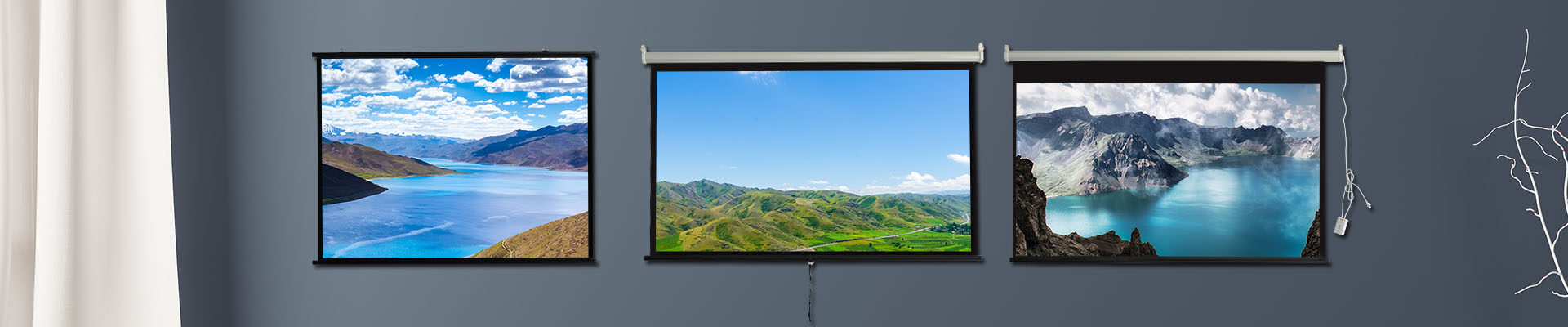
The Convenience Problem Behind Repeated Screen Use
Imagine a meeting room where the screen needs to be lowered before every presentation. Someone has to reach the screen, pull it down, adjust its position, and raise it again after the meeting. None of these actions is particularly difficult, but repetition creates unnecessary steps.
The same issue appears in classrooms, training rooms, conference halls, demonstration areas, and residential entertainment spaces.
An electric screen changes this routine by allowing the screen to move through a motorized mechanism. With one-touch operation, the screen can be lowered when needed and retracted after use.
The value is not simply about saving a few seconds. It is about making the projection system easier to integrate into the normal workflow of a room.
Fewer Manual Adjustments
Manual operation requires physical contact with the screen or its pull mechanism. If the screen is large, installed at a high position, or located behind furniture, access can become inconvenient.
Motorized operation removes much of this physical interaction. The screen can remain installed in its designated position while operation is handled through the associated control system.
This is especially useful in spaces where projection is not the only function. A meeting room, for example, may need to switch quickly between presentations, discussions, video playback, and other activities.
Why Surface Flatness Matters More Than It Looks
Convenient operation solves only one part of the problem. The projection surface itself also matters.
A projector sends an image onto the screen, so any visible wave, crease, or uneven section can become noticeable when large areas of the image contain text, straight lines, charts, or architectural drawings.
A slightly uneven surface may not be obvious when displaying a photograph. It can become much easier to see when a presentation contains a spreadsheet or a slide with fine lettering.
This creates an important distinction between simply having a projection screen and choosing a screen structure that matches the intended use.
| Consideration | Manual Screen | Electric Screen |
|---|---|---|
| Operation | Requires physical handling | Motorized movement |
| Daily convenience | Suitable for occasional use | Convenient for frequent operation |
| Installation position | Access needs to be considered | Can be installed in less accessible positions |
| Retraction | Manual | Controlled movement |
| Large-format use | Handling can become less convenient | Better suited to repeated automated operation |
| Surface management | Depends strongly on screen construction | Construction and movement consistency remain important |
The table does not mean that an electric design is automatically better in every situation. A small room with occasional projection may have little need for motorized movement. The practical advantage becomes clearer when frequency of use, screen size, installation height, and room layout are considered together.
What Creates a Flatter Projection Surface?
A flatter surface does not come from the motor alone.
Several physical factors influence how a screen appears when fully extended. These include the screen material, housing design, fabric characteristics, installation method, and the way the screen is supported during operation.
A well-designed structure helps the screen extend in a predictable manner rather than relying entirely on manual positioning.
For procurement teams planning projection installations, this is an important point: electric operation and surface flatness should be evaluated as two related but separate considerations.
Screen Material
Different projection environments may require different screen materials. A surface suitable for a compact conference room may not be the best choice for a large engineering projection.
Material selection can influence viewing characteristics, image appearance, cleaning requirements, and long-term handling.
Instead of choosing only by appearance or screen size, it is more practical to start with the room itself:
These basic questions often narrow the appropriate configuration quickly.
The Motor Is Only One Part of the System
When people hear "electric screen," the motor is usually the first component they think about. In reality, reliable operation depends on the cooperation of several parts.
The motor controls movement, while the roller, housing, screen material, mounting components, and control arrangement all contribute to the final user experience.
If one component is poorly matched to the others, the convenience of automation can be reduced.
For example, an oversized screen installed in an unsuitable location may create installation challenges even if the motor itself is capable of moving it. Similarly, an appropriate screen material cannot compensate for incorrect installation.
This is why product selection should focus on the complete screen system rather than treating the motor as an isolated feature.
Where Electric Screens Make Practical Sense
The use of motorized projection systems extends beyond traditional conference rooms.
Meeting and Training Rooms
In corporate and educational environments, screens may be used multiple times throughout the day. Quick deployment can help keep the room ready without leaving a permanently visible screen in place.
Home Entertainment Areas
A retractable screen can remain concealed when projection is not being used. This gives the room greater flexibility compared with a permanently installed display surface.
Engineering and Presentation Spaces
Large drawings, diagrams, specifications, and detailed visual content can make surface irregularities more noticeable. In these environments, screen construction deserves particular attention.
Multi-Purpose Rooms
A room may need to function as a presentation area during one period and remain open for other activities later. A retractable design can help maintain this flexibility.
Choosing the Right Screen Size Is Not Just About the Projector
A common mistake is to select the screen size based only on projector capability.
The viewing distance, ceiling height, wall dimensions, aspect ratio, and seating arrangement also matter. A screen that is too large can make the room feel crowded, while a screen that is too small may reduce readability for people sitting farther away.
For a practical assessment, the following factors can be checked before installation:
- Viewing distance — Determine how far the furthest viewers will sit.
- Wall or ceiling space — Confirm that the housing and screen can fit without interfering with lighting or ventilation.
- Aspect ratio — Match the screen format to the content most frequently displayed.
- Screen drop — Make sure the extended screen reaches an appropriate viewing height.
- Operating frequency — Consider whether manual or motorized operation makes more sense for the room.
- Maintenance access — Leave sufficient space for inspection and servicing.
These details may seem basic, but they often determine whether the final installation feels convenient or awkward.
Huinuo's Broader Projection Screen Production Experience
Huinuo has expanded its production capabilities over more than a decade, eventually establishing a 20,000-square-meter workshop on approximately 10 acres of land acquired in 2020.
Its product scope covers several types of projection-related products, including electric curtains, hand-drawn screens, branch screens, drawing frames, engineering curtains, and projector accessories. The company also develops raw materials and accessories related to projection screens.
This broader product structure is relevant because projection installations rarely consist of a screen alone. Different rooms can require different combinations of screen formats, mounting structures, accessories, and operating methods.
Huinuo also handles customized projection products for applications where standard configurations do not fully match the installation requirements. This can be useful when dimensions, mounting conditions, or functional expectations differ from common room layouts.
What Should Be Checked Before Selecting an Electric Screen?
Rather than treating automation as the only deciding factor, a more useful evaluation can combine several practical questions.
| Selection Point | Question to Ask |
|---|---|
| Usage frequency | How often will the screen be opened and retracted? |
| Screen dimensions | Does the available wall or ceiling space accommodate the required size? |
| Surface requirements | Will presentations contain small text, charts, or detailed graphics? |
| Installation | Is wall, ceiling, or another mounting method more appropriate? |
| Operation | Who will operate the screen and from where? |
| Room flexibility | Should the screen remain visible when not in use? |
| Accessories | Are additional projection accessories required for the installation? |
| Customization | Does the room require dimensions or configurations outside standard options? |
This approach helps prevent a common problem in equipment planning: paying attention to a single feature while overlooking the conditions that determine actual performance.
One-Touch Operation Is Really About Workflow
The strongest argument for an electric screen is not that pressing a button is impressive. It is that small improvements in routine operation can make a shared space easier to manage.
When a screen can be deployed without someone manually reaching for it, the room can transition from normal use to presentation mode with fewer interruptions. When the presentation ends, the screen can retract and leave the space available for its next purpose.
At the same time, convenience should not replace attention to screen construction. The best result comes from matching the operating method, screen material, dimensions, installation structure, and room requirements.
For spaces where projection is frequent, surface consistency and simple operation are becoming increasingly important parts of equipment planning. Electric screen systems address the operational side of this equation, while proper material selection and installation determine how effectively the projection surface performs.
As projection environments become more flexible, electric screen technology is likely to remain relevant wherever quick deployment, retractable installation, and consistent positioning matter. Huinuo's range of electric screens, manual screens, engineering curtains, frames, and projector accessories reflects the wider range of configurations now used across different projection spaces. The practical lesson is straightforward: choose the screen around the room's real operating needs, not simply around the projector itself.
Send Inquiry
Our company will participate in the 140th China Import and Export Fair (Canton Fair). Booth number is 17.2K42
We sincerely welcome global customers to visit our booth and establish long-term cooperative partnerships.